The biodiesel 101 video
 3:14 AM |
  Posted by
Dr Hil
Posted by
Dr Hil
It is also give a nice idea about the biofuel as a whole.
 Labels:


Don't Mix Politics and Biodiesel
the attention of both major fuel manufacturers and those who prefer
to make their own homemade biodiesel. Many car manufacturers are
seeing the wisdom of creating vehicles that can accommodate a
biodiesel product by creating a diesel car that is friendly to the
use of vegetable oil blended with diesel fuel.
Perhaps one of the biggest benefits to biodiesel making is that it helps to reduce the United States dependence on foreign supplies of
oil.
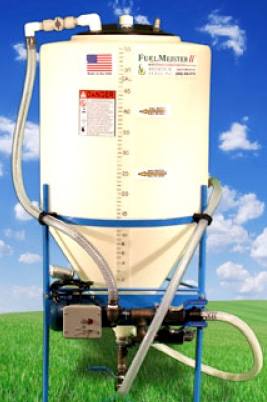
Making your own biodiesel is also a way of keeping your costs down in the case of a national emergency such as the devastating hurricanes that recently hit the Gulf coast. Biodiesel making also keeps farmers employed. Biodiesel production is self-sustaining because it is a completely renewable resource. Biodiesel product is made from soya and canola, which is a self-sustaining fuel. Best of all it provides a market for excess soya bean oil production. Unlike the burning of fossil fuels biodiesel making gives back more energy to the environment that it takes. Lifecycle studies show that for every unit of fossil energy it takes to manufacture fossil fuel, 3.2 units of energy are gained during the biodiesel making life cycle. This kind of lifecycle study would take into account the planting and harvesting of the soy or canola as well as its transportation, production and distribution to the end user. In addition to displacing North America's reliance imported petroleum, the use of biodiesel product has been shown to reduce air pollution and greenhouse gases. According to the national biodiesel board a 1998 biodiesel lifecycle study, jointly sponsored by the U.S. Department of Energy and the U.S. Department of Agriculture, concluded biodiesel reduces carbon dioxide emissions
by 78 percent (compared to petroleum diesel.)
The total fossil energy efficiency ratio of the production, manufacture, transportation, and distribution) for diesel fuel and biodiesel shows that biodiesel (diesel gas blended with vegetable oil) is four times as efficient as diesel fuel.
Burning just a 2% biodiesel blend in on-road diesel fuel will curtail all kinds of harmful emissions. Annually it has the potential to reduce poisonous carbon monoxide emissions by more than 35 million pounds, reduce ozone forming hydrocarbon emissions by almost 4 million pounds, reduce hazardous diesel particulate emissions by almost 3 million pounds and reduce acid rain-causing sulfur dioxide emissions by more than 3 million pounds.
Given these statistics about biofuel product it is quite baffling why more politicians don't endorse biodiesel making as part of their political platform. Biodiesel product is available commercially but it is not available readily to everyone. This is possibly because the major gas companies are all too well aware that biodiesel making cuts into their profits. Until the day arrives when biodiesel fuel is made more readily available for everyone it seems that homemade biodiesel making might be a solution for those who are suffering economic problems due to disasters and unfriendly political decisions about the distribution of gas in general. The distribution of biodiesel is still sporadic but it is less so than it was before the turn of the century. The national biodiesel board contains a comprehensive list of locations where biodiesel
product is readily sold from pumps including an interactive point and click map that lets you find a biodiesel fuel station near you. Read more on how to Make Your Own Biodiesel.
Why Are Gas Prices So High Now?
World gas prices are at record levels, and experts all agree there won't be any significant downwards motion anytime soon. Why are gas prices so high now? What happened over the last year or two to make the price of gas double in the US?

This simple answer to the high cost of oil is one of supply & demand. There is higher, rising demand, and stagnant or even declining supply. China and India are industrializing at breakneck speeds, and as a result demand for energy - oil in particular - is rising in lock-step.
The war in Iraq, among other factors, has reduced global supply.
The result is a recipe for increasing gas prices.
But why are gas prices so high now? Another piece of the puzzle is output capacity. Refineries have been running at or near capacity for years. If they weren't, they could probably meet the demand, and world gas prices would stabilize. But because they are already producing all they can, as demand rises, prices follow suit.
There isn't much we can do directly about these crazy gas prices. However, there are many gas mileage improvements that have the same effect of paying lower gas prices. So before you ask yourself why are gas prices so high, spend some time at sites like "Gas For Less Money" and educate yourself about how to spend less of your money on gasoline to begin with!
Learn these simple Gas Mileage Improvements that will save you up to 40% without spending anything extra!
Article Source: http://EzineArticles.com/?expert=Michael_Ullman
Secrets of Coskata - a new bio-fuel
You must see this video.
This company solves the problem of the sources of ethanol and biodiesel using bacteria.
you must see it:
Palm Oil & Deforestation: Truth or Fiction?
Have you ever noticed that a herd of lembu or cows, all tend to move together in the same direction? Have you often wondered why this phenomenon occurs?
Imagine that you are taking a slow and leisurely drive along one of Malaysia�s lovely scenic country roads, away from the speeding juggernauts and cars on the North South highway. As you drive, you take in all the rolling fields of lalang, oil palm plantations stretching as far as the eye can see. Suddenly, something catches your attention. It�s a herd of lembu up ahead, in a nearby open field. Curiosity gets the better of you and you park off the road to investigate further. And there, you stand beside your car, in the middle of nowhere, watching the herd instinct in action.
For unexplained reasons, you scramble towards a low wooden fence and catch up to the lembu as the herd slowly makes its way across the field of lalang. Curious as to why they would all move in the same direction, you look towards the center of the herd and wonder aloud: "Why are all the lembu walking in this particular direction, as if on auto pilot?"
When I ask this question at all my seminars, the response I hear from delegates from all over the world is invariably the same: "They're all moving in the same direction because everybody else is!"
People and organizations too are like this herd of lembu. They too are strongly influenced by the direction of the surrounding herd. Just take a look at the behavior of some NGO's in the developed world.
First, we have the so-called Centre for Science in the Public Interest (CSPI). Helmed by its Executive Director, the infamous Michael Jacobson, and backed by an annual budget in excess of US$16 million, CSPI has launched disinformation campaigns against Malaysian Palm Oil. In fact, so disingenuous has been Jacobson's claims that he has earned the rare distinction of being called various things in the media � ranging from the benign "Consumer Advocate" to the less flattering Nutrition Terrorist, Terrorist, Food Fascist, Food Cop, Killjo�, Food Nazi etc. In fact, the latter labels appear with such stunning regularity in the media that few men could have been so definitively defined.
Jacobson, to put it mildly, is guilty of utter disregard for the truth and scientific facts, frequently exaggerating figures and claims to advance CSPI's own agenda
Having failed in a campaign in the eighties to portray palm oil as unhealthy, Jacobson and CSPI have been racking their collective brains as to how to discredit what is, inherently, healthy oil. Health claims or the converse, �un-healthy� claims, of course, have to be backed by rational science. However, these are matters that CSPI, despite their grandiose and associative-scientific sounding name, would have difficulty in delivering. Throwing figures and �facts� that would fail to pass muster for a secondary school science project, CSPI recklessly and with gay abandon, continues to launch fresh attacks, this time targeting the sustainability of oil palm cultivation. They argue, most deviously, that oil palm plantations have led to the destruction of rainforests and consequently, have deprived orang utans of their natural habitat. Interesting. Perhaps, even persuasive. If not, for the facts!
The superior sustainability of the Malaysian palm oil industry is patently obvious, and it is clear that the Malaysian oil palm cultivation is superior to any large scale agriculture in the tropics or the temperate countries in terms of sustainability parameters. The plantation industry is professionally managed, with many of them such as IOI Corporation, Golden Hope, PPB Group and KL Kepong, operating as listed corporations on the Malaysian stock market where corporate governance and corporate responsibility are well practiced more than farm activities in other parts of the world. The Palm Oil Truth Foundation (www.palmoiltruthfoundation.com) has sought to remedy the misconception that palm oil contributes to deforestation and enlighten the world of the fact that the Malaysian Palm Oil industry has always adopted sustainable cultivation best practices, including conservation and replanting. The MPOC, in fact has set up a US$5 Million Conservation Fund to assist in wild-life conservation.
But Jacobson understands the lembu phenomenon and knows that the herd instinct will take over. And sure enough, the NGO�s and other organizations have taken the bait and like the proverbial lembu, have predictably, blindly followed the herd.
First, the BBC sent a film crew to film the so�called deforestation and habitat loss of the Orang Utans. Then the NGO�s added their voices to the irrational chorus of calls for consumers to avoid palm oil products as they had allegedly come from unsustainable sources. The Friends of the Earth, a UK NGO alleges that �the palm oil industry is now considered by scientists as the biggest threat to the Orang Utan�! Scientists? Which scientists? The pseudo-scientists from the verbose sounding �Center for Science in the Public Interest�? It was almost hilarious to watch documentary after documentary warning of the dangers of palm oil because of the damage caused by the humble oil to Orang Utan habitats. Hilarious because nothing could be further from the truth, at least as far as Malaysia is concerned!
Comprehensive policies and laws on environmental protection are in place in Malaysia and are strictly enforced by the Department of Environment. Endangered species, including Orang Utans, needing protection are given priority with strong conservation programs put in place. Sabah, with a growing palm oil industry and one of the largest states in Malaysia had drafted a master list of protected areas based on the guidelines of the World Conservation Union (IUCN). In fact, 21.8% of Sabah is now protected, more than double the 10% recommended by the IUCN. It is also interesting to note that the Malaysian Palm oil industry is the prime mover for the Roundtable for Sustainable Palm Oil to encourage best practices and to minimize any adverse impact on the environment by the industry, long before the latest shenanigans initiated by CSPI started.
Almost all oil palm expansion in Malaysia is pursued through the conversion of existing rubber, cocoa and coconut plantations or from logged over forest areas which have been earmarked for agriculture. Moreover, out of the total land area of 30.2 million hectares, only 6 million hectares have been designated for agriculture under the Third Malaysia Agricultural Plan. Oil palm cultivation falls well within the area zoned for agriculture. Ironically, the area still under forest cover remains at well over 60 %, certainly much higher than that of the developed nations from which all this brouhaha over Orang Utan habitats are originating.
Recently, the European Free Alliance MEP�s together with an MEP grouping known as The Greens in the European Parliament (together, they form the 4th largest grouping in the European Parliament) lent their not inconsiderable voice to the issue. Lobbying the European Parliament�s �Industry, Technology, Research and Energy Committee�, which is tasked with proposing energy policies with an agreed EU target of 25% biomass renewables by 2020, this grouping managed to get the Energy committee to include, inter alia an amendment to �ban the use of palm oil for feeding our cars� due to the �lack of environmental standards and safeguards� leading to �an increase in tropical deforestation�, whilst �failing to reduce greenhouse gas emissions significantly�! Couching their proposal in euphemistic language, and this really takes the cake, the grouping went on to justify their proposal on the basis that the emergence of a European biofuels sector would offer opportunities for biofuel technology transfer to developing countries crippled by rising oil prices! It is this last statement that gives a clue as to the grouping�s real agenda and intentions. The proposal is designed to protect their turf, to protect the European biofuel sector! So much for all the WTO rules against protectionism.
It is about time that the world wakes up to such insidious and deceptive campaigns and that can only be achieved when the world develops the discernment to see through the veil and stop being lembus. That may be counter-intuitive but the herd instinct can only be overcome through education and clear branding and communication programs. Programs that will, ultimately, expose the lies and half-truths that appear to be the penchant and almost exclusive purview of CSPI and others of their ilk.
motor-cycle with biodiesel - test run
That is a good inspiration for us.
Thanks.
How Can You Benefit From Biodiesel?

If you have an interest in being environmentally friendly, then no doubt you're aware of the damage fossil fuels are doing to our environment. Not only that, but at some point they will run out. Add in the recent jump in gas prices, and it's hardly surprising that more people are talking about making their own biodiesel fuel. Although it sounds like a great idea, you need to consider a few points before going ahead and making your own biodiesel fuel.
To start with, let's take a look at what biodiesel fuel actually is. At its most simple, biodiesel fuel is made from either vegetable oil, animal fat, or mixture of the two. It's a clean burning fuel that is made from renewable resources hence the name biodiesel.
Generally, biodiesel fuel is made from straight vegetable oil, sometimes referred to as SVO. So if you want to make your own biodiesel fuel, you'll need to have an adequate supply of the basic ingredients. Unfortunately, most households don't produce enough waste animal fat or vegetable fat to come anywhere close to making enough biodiesel fuel to keep the family car running.
This has led to a whole new industry, with the basic aim of sourcing much larger quantities of raw product. They get together with restaurants, bakeries, and any other business that uses a deep fryer, so that they can collect the used oil for recycling. The oils are then blended and used as the basis for biodiesel fuel. The processes are the same as you'd use to make biodiesel fuel at home, but by having access to a much larger supply of raw products, these companies can produce biodiesel in quantities that are more viable.
One thing to remember is that it's not quite this simple! Used vegetable oil needs to be mixed and stored, which can be quite a problem if you have large amounts of it. You also need to dewater, filter and deacidify the waste oil before it can be used for making biodiesel. This makes the production of biodiesel fuel at home a lot more complicated.
Having said that, it's certainly still quite possible to make biodiesel fuel at home, simply by buying straight vegetable oil, rather than using waste products. Even though it will cost you a lot more, when you compare it to the cost of buying the necessary amount of gas to run your car for a year, you can still save an enormous amount - somewhere around 75 percent. Even better, you're saving the environment too.
The short answer is yes! It can be blended with petroleum in any percentages and used as fuel. There is a fuel called B20 which is 20 percent biodiesel that has shown significant environmental benefits. It can be used in an existing diesel engine with either little or no modifications. The only thing to be aware of is that biodiesel acts as a solvent and can remove old deposits on on your fuel tank walls and your fuel lines. This may lead to a clogging of your filters so care should be taken. But hey - then you have a clean system!!
So if you're interested in saving money and helping out the environment, look at the option of making biodiesel fuel at home. It takes a little bit of effort, but the rewards are definitely worthwhile.
Alternative Fuels Snatch Auto Industry’s Limelight
The term usually refers to a source of which energy is renewable. Its main function is to store energy in a form that is stable and can be easily transported from the place of production to the end user. Alternative fuels include biodiesel, butanol, ethanol, chemically stored electricity like batteries and fuel cells, hydrogen, methane, natural gas, biomass, wood, wood gas, vegetable oil, and peanut oil.One of the vehicles using such alternative fuels is the Volvo Multi-Fuel. Said vehicle is optimized to run on five different fuels so there is a need to upgrade on Volvo performance parts. The Volvo Multi-Fuel, based on the Volvo V70, is powered by a 2.0-liter five-cylinder turbocharged engine that will run on hythane (10 per cent hydrogen and 90 per cent methane), biomethane, natural gas (CNG), bioethanol E85 (85 per cent bioethanol and 15 per cent gasoline) and gasoline. Aside from the fact that it runs on 5 different engines, another notable facet of the Volvo Multi-Fuel is its relatively consistent performance not considering the fuel used.
Volvo claims that the turbocharged engine of the vehicle is producing about 200 horsepower. It is sufficient to power up the wagon. The vehicle runs exceptionally clean. In fact, when pure renewable fuels such as hyrdrogen, biomethane or bioethanol are used, very little fossil carbon dioxide is emitted.Hythane, E85 bioethanol and CNG biomethane are extra-clean fuels. This is main reason why the vehicle has surpassed all existing emissions regulations imposed in any market at the present time. Furthermore, it would also qualify for the upcoming EuroV emissions regulations. The mentioned fuels also have the advantage of being carbon neutral. It means that the amount of carbon emitted when the fuel is burned is equivalent to the amount acquired by the crops used to make the fuel.When changing between fuels, the driver only has to choose between gaseous or liquid fuel and the engine management system will adjust to optimize performance for the fuel.
The Multi-Fuel has separate fuel tanks for gaseous fuels that include hythane, biomethane and CNG; and liquid fuel like E85 and gasoline. "The whole car is optimized for high performance, driving on any of the five different fuels," said Mats Moren, project leader engine at Volvo Car Corporation. "It is a step towards a hydrogen-powered society. Perhaps we can develop the system even further, to run on a higher blend in the future." Volvo is known for its commitment to lead automotive milestones. As a fact, it has been associated with remarkable safety and ninety-degree bodywork. At this point in time, the automaker has already established a name that embodies style, quality, cutting-edge design – and superb green technology. Aside from
Volvo, renowned automakers like Daimler Chrysler are producing entry vehicles that use alternative fuels. The latest entry so far is the E320 CDI BlUETEC that runs on a biomass-to-liquid (BtL) fuel known as SunDiesel. Said fuel can be used as the lone fuel or as an additive. "We believe BtL fuels can make an important contribution to our energy supply,” explained Prof. Dr. Herbert Kohler, vice president of the Research Body and Powertrain and also chief environmental officer of DaimlerChrysler AG.
"They can reduce our dependence on fossil fuels, and with their good carbon dioxide audit they can also help make mobility more environmentally compatible." The Mercedes-Benz E200 NGT and the smart four two cng were also entered, both running on CNG. The E 200 NGT reduces CO2 emissions by over 20 per cent and with a power output of 163 horsepower from the 1.8-liter engine. It is the most powerful CNG passenger car currently in production. The driver can decide whether to use CNG or gasoline using buttons on the steering wheel, and an electronic control unit ensures a smooth transition from one power source to the other. Fuel consumption is 39 mpg with CNG and 26 mpg with premium unleaded.
Ford’s green vehicles include Focus C-MAX H2 ICE is powered by a prototype hydrogen internal combustion engine. The engine is a 2.3-liter four-cylinder gasoline engine that produces 110 horsepower. According to Ford the Focus C-MAX H2 ICE has a driving range of about 120 miles with the fuel capacity of 2.75 kg of hydrogen. General Motors newest entry is Saab 9-5 BioPower, which runs on either bioethanol or gasoline. The BioPower is not only environment-friendly; it also but delivers more power and performance than the gasoline-only version. The vehicle can switch between bioethanol and gasoline without any adjustment by the driver. The Q7 TDI, powered by 3.0-liter direct-injection with impressive fuel economy of 22 mpg, is Audi’s latest green SUV pride. For the recently held Challenge Bibendum, the Q7 TDI was fueled with Synfuel produced by Shell. It is manufactured from natural gas, biomass or coal to decrease the environmental impact by reducing exhaust emissions.
About the Author: Glady Reign is a 32 year old is a consultant for an automotive firm based in Detroit, Mi. she is a native of the motor city and grew up around cars hence her expertise in the automotive field.
11 Most Frequently Asked Questions on Converting Your Car to Biodiesel

1. OK, So what do I need to do to convert my car to biodiesel?
First and foremost, you need to have a diesel engine car. Biodiesel CAN NOT be used in a gasoline engine. Having said that, any engine that runs on #2 diesel can also be run on biodiesel. This means, home furnaces, generators, semi-trucks, farm equipment, fishing boats, etc. There is really nothing you need to do and nothing you need to convert. Just use it the same as any other fuel. “Conversion” becomes necessary when you want to run your diesel engine on Straight Vegetable Oil (SVO) For some pre-1994 model vehicles it is said that you need to replace your rubber hoses with synthetic ones. But truthfully, unless you have a leak, I wouldn't bother.
Not necessary. There is no mechanical reason that I know of to support this. Any blend of biodiesel, from 100% biodiesel (B100) to 100% diesel can be used in any diesel engine.
Not necessary. Biodiesel is a solvent and as such will also start cleaning your diesel engine and your fuel system. What it is going to clean is the sludge left behind from regular diesel fuel. Over time, this sludge can clog your filters. The truth is, biodiesel will keep your car's fuel system very, very, clean. The degreaser cleaning properties of biodiesel will clean the system of the accumulated diesel sludge/debris first. It might take weeks, months or years, who knows? Engines are funny. After a while, you may need to change your fuel filter, but you'll need to change them anyway as a normal maintenance procedure. If it clogs up, or you are having a problem (loss of power, smoking, coughing, trouble starting, etc.) and you suspect it could be related to the fuel filter, then by all means, switch it out, they are fairly cheap anyway. Simply change out the filter and chances are your problems will go away. It's not a bad idea to keep an extra fuel filter on hand anyway.!
..just in case. The good news is, once your engine's fuel system has been cleaned, it will stay incredibly clean from then on.
Biodiesel is a solvent and a degreaser (a good one) and as a solvent, yes, it will eat rubber over time. The truth is, petroleum diesel with a high sulfur content does this too, only slower. Biodiesel acts a lot like Ultra Low Sulfur Diesel (ULSD) that is now fast becoming the diesel standard. Also, since 1993, diesel engines and equipment have been reworked and redesigned, using synthetic rubber with ULSD in mind. The auto makers have been phasing out rubber from the fuel systems themselves. This is resulting in fewer fuel leaks for diesel and biodiesel users alike. If you have a pre-1994 vehicle with rubber fuel hoses and are experiencing leaking problems, then yes, you should replace them with ULSD compatible hoses.
No problems at all. You can switch back and forth as much as you like.
It's kind of interesting to watch, truthfully. As the biodiesel industry gets older and wiser, more and more OEMs (Original engine Manufactures) are warming up to this idea and making positive statement about 100% biodiesel and this is reflected in their warranties. The truth is, it's kind of tough for them to argue the fact. The diesel engine, after all, was designed for this. Caterpillar, John Deere, and New Holland all accept and explicitly warrant B100 biodiesel in their engines. Others are taking a more "wait and see" attitude. They are warranting blends like B20, or B5 but stop short of wholeheartedly endorsing the idea. Other say they "neither oppose nor endorse" the use of bio-fuels.
This is where it gets interesting; Mercedes and Volkswagen both sell cars in Europe and the USA with diesel engines and there is no problem with warranty issues in Europe, but here in the good ol USA, they don't/won't support the use of biodiesel or the biodiesel industry. So bottom line? One, check your warranty. Two, if a OEM wants to deny a warranty based on biodiesel use, they can. But legally, they have to show a compelling reason that biodiesel hurt the engine. Which would be very hard to do. This is a very good reason to use ASTM (Commercial biodiesel) fuels, especially in newer cars or trucks.
Because modern diesel engines have been modified to meet diesel #2 viscosity standards, straight vegetable oil like the kind Rudolf Diesel used in 1912, is much thicker. This is the thing which kept biodiesel out of the energy/fuel playing field for so long. What has happened recently is a process called "transesterification." This process is used to thin the vegetable oil and remove the glycerol molecule from the vegetable oil and replaces it with methyl alcohol , or methanol. In order to do this, the methanol is mixed with sodium or potassium hydroxide (Lye) before being mixed with the vegetable oil. This is the basic process. Commercial production requires more ingredients and more refining processes, but you get the picture.
For home-brewers, the possibility of residual ingredients or by-products in the brewed biodiesel is a compelling reason to "wash" then test the biodiesel. Biodiesel that is commercially sold, is regulated and made to the ASTM standard, does not allow for residuals to be present. Therefore, you should have little worry with commercial biodiesel .
As we have said, just because the first diesel engines were designed to burn vegetable oil, a lot has changed in the engine world since 1912. Biodiesel fuel, to work efficiently in a modern diesel, we need to lower the viscosity (thickness) of the vegetable oil. we accomplish this through the biodiesel production process. It can also be accomplished by modifying the engine with a SVO Conversion kit. But additionally, there are other reasons not to use straight vegetable oil. One, it still contains glycerol which doesn't burn as cleanly as biodiesel and can leave deposits behind in the injection chambers. Two, SVO still needs to be de-watered, filtered and heated prior to introducing it into your tank. Also, filtering SVO can be very tedious to say the least, needing lots of time and energy, not to mention equipment and tools
The short answer is...yes. Biodiesel is 100% compatible with diesel #2. There are no worries in that regard. One of the compelling reasons to buy a biodiesel kit in my opinion is to get rid of that financial albatross, called "heating oil" in colder climates. A biodiesel kit can pay for itself in a matter of months, one winter definitely. Kerosene, which is also known as diesel #1, or heating oil #1, is thinner than diesel #2. This, of course, requires a bit more experimentation, but generally, if a heater is designed for kerosene, then it will work with a biodiesel blend. (meaning a higher percentage of kerosene and a lower percentage of biodiesel)
David Sieg is the Managing Director of Global Biotechnology Solutions, an American Company based in Vietnam. He is also the author of the popular http://www.making-biodiesel-at-home.com web site where you can find all the information you need to start saving money of sky-rocketing fuel costs.
Beating the High Price of Gasoline with Biodiesel
With the price of traditional fuel rising faster everyday, people everywhere are looking for alternatives. Electric cars were once touted as the way to save the environment and beat the cost of gasoline, but they are so expensive that very few people can afford to save money by purchasing one.
Alternative fuels have long been discussed as a way to cut fuel prices and help the environment, but with the specialized engines they require, and their inability to pass the regulation tests required by the EPA, they have been a disappointment. The more solutions that are offered to the problem of high fuel costs and dangerous emissions, the further it seems we are from a solution...until now.
There is a fuel alternative that is all that it has promised to be and more. Biodiesel is not only cost effective it is environmentally friendly, as well. Biodiesel is completely biodegradable and made from renewable resources. That means that when you use biodiesel to power the engine of your car you aren't robbing the earth of the riches meant for your grandchildren to enjoy.
Unlike the previous vegetable oil based fuels that can only be used in modified, specially made combustion- ignition engines, biodiesel can be used in its basic form to power the everyday diesel engines on the market today. That means that a simple to make batch of biodiesel could be used to power the family car on its daily errands.
Biodiesel is registered with the EPA as a legal motor fuel meaning that it can be sold and distributed just like the gasoline you pump into your car at the gas station. Unlike traditional gasoline, biodiesel isn't as widely available for the average consumer. It can be purchased directly from distributors and manufactures and it is sold a few select stations around the country. If you are interested in trying biodiesel in your car, your best chance of finding it is to make it yourself.
The process is surprisingly easy and the ingredients are readily available. By simply mixing lye, alcohol, and vegetable oil in the right amounts, you can great biodiesel. This economical alternative fuel is made through the simple chemical process of transesterification. During this process, the glycerin is removed from fat or vegetable oil. The process naturally leaves behind byproducts, including methyl esters, which is the chemical name for biodiesel, and glycerin, commonly used in soap production. Biodiesel is completely free of sulfur and aromatics, something that can't be said about traditional fuels.
Batches of biodiesel can be mixed up in small or large sizes and if done effectively will end up costing about seventy cents a gallon.
An Introduction To Biodiesel
First things first: the information contained below on making biodiesel is not meant to provide you with a complete and thorough enough education on the subject for you to go out and make your own biodiesel without any further study. It is imperative that you recognize from the outset that making biodiesel involves chemicals and chemical reactions which can be quite dangerous if dealt with improperly.
With that in mind, please consider the following to be a general introduction to the process of making biodiesel, with the implicit agreement that if you decide to make your own biodiesel, you do a bit more research on the subject before beginning.
That said, we start with your ingredients, divided into the stages of the process of making biodiesel in which you will need them:
Mixture
? Waste Vegetable Oil (WVO) ? used cooking oil, lard, animal fat, fryer grease; ? Sodium Hydroxide (NaOH) ? that?s lye or caustic soda, dry only; ? Methanol (CH3OH) ? at least 99% pure;
Titration
? Isopropyl/Rubbing Alcohol ? again, at least 99% pure; ? Phenolphthalein Solution ? kept out of the sunlight and no more than 1 year old; ? Distilled Water;
Washing
? Water ? Vinegar
Here is a brief rundown of the process of transterification, also known as making biodiesel:
1. Filter WVO;
Warm it up to about 95? F or until it runs freely. Then run it through a canteen- or restaurant-type coffee filter or a double layer of cheesecloth set into a funnel. This removes any food scraps and other solids.
2. Remove water;
This is an optional, but highly advisable, step in making biodiesel. Leaving in the water in your WVO can slow down the chemical reaction and cause the formation of soap. Heat your WVO to 212? F (100? C) and let the water boil off. As the boiling begins to slow, raise the temperature up to 265? F (130? C) and let it stay there for 10 more minutes. Then remove it from the heat, and set it aside to cool.
3. Titration (revealing how much catalyst will be needed);
This is an integral step in making biodiesel as it will tell you how much sodium hydroxide (lye or caustic soda) you?ll need to use. It is this step alone that is the most critical and complicated part of making biodiesel, so do not begin until you feel confident that you understand titration completely.
In summary, you?ll make a solution out of 1 g completely dry lye thoroughly dissolved in 1 l distilled water. Being vigilant that this sample remains uncontaminated, place it in a reaction vessel where it can be warmed and stirred.
Meanwhile mix in a separate container 10 ml rubbing alcohol and 1 ml of your filtered, heated, and cooled WVO. Add 2 drops phenolphthalein (a pH tester indicating the acidity or alkalinity of a given substance).
Now?s where making biodiesel gets really delicate. You?ll next add a single drop at a time of this mixture into your mixed and heated titration sample, keeping careful count of each and every drop. You?re looking for the combination that gives you a pH of 8-9 (a light purple color).
A mathematical equation comes next, in a nutshell:
?# of ml titration derives X # of liters of WVO being transterified + 3.5 g lye for every liter of fresh (unused) vegetable oil to be used
Then, once you?ve determined the ratio, do the titration again to confirm your results. Remember, measure twice and get the mix right the first time.
4. Prepare Sodium Methoxide;
Mix an amount of methanol equal to about 15-20% of the weight of your WVO with sodium hydroxide (lye) to make sodium methoxide. If the previous step was the most complicated and intricate, this step is the most dangerous. Avoid inhaling any vapors and protect your skin, which this chemical can burn.
Also be careful what type of container you use to hold your sodium methoxide mixture as it can corrode paints, while lye reacts poorly with tin, zinc, and aluminum. For the purposes of making biodiesel, stick with glass, stainless steel, or enamel.
5. Heat WVO again, stirring in Sodium Methoxide;
Heat WVO to 120-130? F and mix in Sodium Methoxide stirring (preferably with a machine like a paint stirrer) for the better part of an hour.
6. Let the biodiesel mixture settle (removing the glycerine);
Making biodiesel properly requires that you let it sit and cool for no less 8 hours. Your mixture will separate into 2 layers:
? your esters (biodiesel) ? soap (waste)
7. Wash and dry biodiesel;
Removing the soap waste.
8. Check the quality of your biodiesel;
See our companion article to on ?How to Test the Quality of Biodiesel? at http://biodiesel.biogreenlife.com/20/how-to-test-the-quality-of-biodiesel/.
Once you make your own biodiesel for the first time, you will surely discover how rewarding an experience it can be. And once you start using the biodiesel you make, you?ll find it even more so. Making biodiesel can liberate you from oil dependency and rising gas costs. Just remember to learn more about the process than the summary information contained in this article before you get started making biodiesel for the first time.

