Whant to know - What Home Biodiesel Kits Can Do For You?
 10:28 PM |
  Posted by
Dr Hil
Posted by
Dr Hil
 Since biodiesel has become more of a necessity than just simply as a preference over the traditional petroleum diesel, there are a lot of alternatives to get its advantages work for you. If your car is already running on diesel, opting for biodiesel would only require minimal configuration on the engine, and none at all at times. There may also be a need to change parts such as the fuel filter, although these are regular maintenance procedures even with regular fuels. If you are planning to purchase a car, you can easily ask a dealer to give you the options for those that run on biodiesel only. If the two options would not work for you, then it would be time to consider purchasing of home biodiesel kits as the next action.
Since biodiesel kits are offered by various companies, choosing which of them would have the most advantage may be difficult. Directions may be contained in the manual, but oftentimes a professional help from a plumber of an electrician or a plumber is needed. Either that, or the home biodiesel kits itself are expensive.
To be sure to get the best ones the first time instead of spending money again in a trail and error basis, you can do well by keeping these two reminders. First is to guarantee that the company you are searching for is credible. Compare their offers and their product reviews from different sites as well. Naturally, their own sites would have flowering reviews for the product, so better check for user forums and get opinions from them instead. Second is to make sure that the company that offers home biodiesel kits would have a money back guarantee or if they have a customer service support - both would definitely be better.
Going green can definitely guarantee satisfaction that is commensurate to your car's performance.
What you also should know is that there are a few guides that will show exactly how to make your car run on biodiesel without spending much money. I have reviewed the best guides here. I recommend them all...
Do you want to save money using biodiesel? You can do it starting today...
Article Source: http://EzineArticles.com/?expert=Mark_Peterson

Biodiesel Testing - Quality and Purity Testing Increase Confidence And Assure Results
At present, biofuel production is considered experimental, and compared with other fuel production techniques, the total output is still very low. Feedstock supply lines are therefore quite limited, either being sourced from widely distributed waste products of other industries, or from niche crops like canola, a relatively new rapeseed cultivar. This creates a problem for both major and minor biodiesel producers, who have the daunting task of producing homogeneous, high quality fuel sourced from feedstock of varying and ultimately unknown purity and content. The market has responded to the demands of these new industries to supply quality assurance biodiesel testing equipment for every production scale.
Given the climbing public awareness of global warming and strains on global energy output, governments and corporations around the world are fronting the expense of rebates, research grants, and tax breaks for operators in industries which work towards reducing greenhouse gas emissions, making the concept of small, high-tech niche-industry start-ups economically viable. This has attracted big investment dollars in Brazil, the United States, and some members of the EU - most notable among these being Germany, where there are dozens of medium and large-scale alternative energy generation plants.
Biodiesel is defined as a diesel equivalent produced via transesterification of common fats and oils. There are three main avenues of supply of feedstock to biodiesel production plants. The first of these is dedicated crops grown specifically for their organic oils. Examples of these include soy beans, canola (rapeseed), oil palms, and algae. Canola and soy accounts for most of the total biodiesel production feedstock for the world, as it can be grown with conventional farming techniques, with predictable results.
The crop with the potential to produce the most oil is actually a species of algae, Botryococcus braunii, however, there remain serious doubts about its viability as a crop. Medium scale ventures prefer the waste by-products of other farming methods. The woody part of corn plants, left over wood pulp, and other biomass materials can be used as a substrate for biodiesel or ethanol producing bacteria. This supply is desirable for medium-scale producers as it results from otherwise less valuable by-products that can be obtained in reasonably large quantities.
Small-scale and hobbyist biodiesel producers are most likely to make use of waste vegetable oils and animal fats from cooking and commercial food production, as these are ubiquitous, but usually available only in smaller quantities, and hobby users are not likely to need any more raw feedstock than is necessary for a tank of fuel in their car every week. Furthermore, it is impractical for larger producers to collect kitchen waste in the same way an individual can, at least until demand grows enough for such infrastructure to be built.
Large scale producers have ongoing testing requirements for samples from billions of gallons biofuel every year. Due to the experimental nature of the industry, initial investment for such projects is quite expensive, however, due to the mostly uniform content of the feedstock crops used, large biodiesel production plants have run fairly reliably once established. For big biodiesel, the emphasis is on quality assurance: There are stringent requirements put on producers to keep levels of pollutants and various contaminants under tight control. Areas tested can include alcohol content, ester content, sulfur, heavy metal, and water quotas.
Additionally, biodiesel must exhibit certain physical characteristics like viscosity and flashpoint temperature. Small and medium scale producers have slightly different challenges to overcome, as they often do not sell their product, but rather, use it internally to power on-site farming machinery, or in the case of a hobbyist, the family sedan. The challenge here is not in producing product that meets stringent sales requirements (although it is desirable), but rather, ensuring that the higher number of relatively small batches are safe and uniform, so as not to produce content that damages the engines of machinery and equipment.
While this work can be done in-house, it is far more economically viable for producers to contract out as possible. Larger testing enterprises usually have of at least one HPLC (High Pressure Liquid Chromatography) machine or Gas Chromatograph, which are available for less than US$20,000, as well as all the appropriate glassware and apparatus to conduct titrations and other analytic procedures. At the hobby end of the market are self-contained biodiesel reaction vessel kits available for less than $500, and biodiesel testing kits for testing small quantities of product which can be sourced for less than $50.
With the growing public concern over the excess of atmospheric carbon, world peak oil production, and alternative energy solutions, biodiesel is beginning to look like an increasingly appealing stepping stone in between petroleum products and a completely clean implementation of energy storage, like hydrogen. Biodiesel testing requirements factor into the equation for small, mediumComputer Technology Articles, and large scale producers to ensure a supply of quality product.
Source: Free Articles from ArticlesFactory.com
ABOUT THE AUTHOR
With growing environmental concern of burning fossil fuels, biodiesel is a stepping stone for an alternative energy source. To ensure a high quality biodiesel fuel source, biodiesel testing kits are available from Midwest Laboratories. http://store.midwestlabs.com/
Biofuels In The U.S-Just The Facts
 Biofuels are hot. But how hot? Here are "just the facts." But first, what are biofuels? These are fuels derived from plants or animal fat that can replace such familiar oil-based transportation fuels as gasoline or diesel.
Ethanol can be distilled from corn, sugarcane or even straw and other cellulosic plant materials such as wood chips or grasses. Biodiesel is produced from vegetable oil crops such as palm, soybeans or rapeseed, or animal fats and leftover restaurant grease.
High oil prices, technological advances, concerns about energy security and the environment, and efforts to revitalize rural economies have all intersected to drive the biofuels boom. Ethanol has been used as a gasoline additive or stand-alone fuel in the United States and Brazil since the 1970s, but in recent years there has been an explosion of interest, resulting in substantial investment and steeply increased production.
Biodiesel is relatively new in the U.S., but has attracted strong interest and investment as well. There are 113 ethanol plants producing today in the U.S., with a capacity of 5.6 billion gallons per year or 365,000 barrels per day (bd).
Another 84 ethanol plants are either under construction or expanding, which could add another 6.1 billion gallons of annual production capacity (400,000 bd) in the next few years. A barrel of ethanol contains 3.54 million British Thermal Units (BTUs) of energy, while a barrel of gasoline contains 5.25 million BTUs. This means that a gallon of ethanol only provides about 70 percent of the energy that one gets from a gallon of gasoline. A state-of-the-art ethanol plant today can convert a bushel of corn into about 2.8 gallons of fuel ethanol. Two decades ago, this figure was closer to 2 gallons.
n the United States, blenders of ethanol receive a 51 cent-per gallon tax credit for every gallon of ethanol used in gasoline; for biodiesel, the equivalent credit is $1.00 per gallon. In 1980, the U.S. consumed a grand total of 11,000 barrels of ethanol per day. By early 2007, that demand had reached about 400,000 barrels per day, or over four percent of the total gasoline market by volume.
Current federal legislation requires 7.5 billion gallons (490,000 bd) of biofuel use by 2012. The Bush administration recently proposed a target of 35 billion gallons (2.3 million bd) of renewable and alternative fuels by 2017-a goal that would likely require major advances in cellulosic ethanol technology.
In 2006, the ethanol sector consumed nearly 2.2 billion bushels of corn-about 20 percent of the total U.S. harvest of 10.7 billion bushels. Ethanol can be produced from non-food crops, such as switchgrass and straw. But this approach can't yet compete in the marketplace. There is currently intense interest in making this process-"cellulosic ethanol"-commercially viable.
The US biodiesel industry is much smaller than the ethanol industry. Current annual production is estimated at 250 million gallons (16,000 bd), although it is growing quickly. Europe is currently the world leader in biodiesel production and use. Annual production is currently over 1.5 billion gallons (100,000 bd) with substantial new capacity under construction.
Daniel Yergin, chairman of CERA, received the Pulitzer Prize for "The Prize: The Epic Quest for Oil, Money & Power" and the United States Energy Award for lifelong achievements in energy and the promotion of international understanding. Vist CERA at http://cera.ecnext.com.
These are the Main Functions of the National Biodiesel Board

The members of this board are the technology providers, fuel marketers and distributors, biodiesel suppliers, the state, national, and international feedstock and feedstock processor organizations. While starting the association, the board of members had recommended a mission of the association. The mission states that the primary objective of the board is the progress the significance of members by making a substantial growth in the biodiesel industry. The expansion of industry can be achieved through excellent guarantee agenda, proper technicalities, extensive communication and public affairs. The board has dedicated itself to comprehensiveness and reliability.
The board has devised an agenda that makes sure that by 2015, the biodiesel industry will be known as one of the most important aspects of the energy policy of the nation that depends upon the renewable fuels which are clean and harmless to use. The market for the biodiesel by then will be stabilized with the help of the positive marketing. The board, with the help of efficient advisors has also projected that, by the year 2015, around 6% of the demand of diesel will be substituted by the biodiesel or the large number of blends of the biodiesel.
Around the year 1993 and 1994, the NBB or the National Biodiesel Board formed a subdivision known as the National Biodiesel Foundation or the NBF. Its primary task was to carry out numerous activities in fields of literature, science and education. It also consisted of the research and development of the uses of fuels and other goods that are obtained from the soybeans. The basic goal of the foundation is to acquire funds from outside the biodiesel industry and to enhance the funding of the development plants of the biodiesel.
The NBB has been up-to the mark till date as can be seen by the website of the board. The website, on its homepage provides us with the information of biodiesel as well as the current news that is associated with the biodiesel industry. The most important aspect of the website is that, it has provided direct links to the most frequently requested information about the industry as well as the fuel. This helps the new enthusiasts who want to join the industry.
The website also provides us with a direct search link on the top of the website so that you may search any information that you want. The website also provides you with direct links with the market segments and the site index which facilitates you to choose which ever topic you want. There is also a ‘members only’ area on the homepage.
About the Author:
Muna wa Wanjiru Has Been Researching and Reporting on Biodiesel for Years. For More Information on National Biodiesel Board, Visit His Site at NATIONAL BIODIESEL BOARD
warning: you might want to make biodiesel at home too
He use a commercial system to produce it own fuel.
Thsi machine looks very good, although technicaly it is easy to make biodiesel yourself
It is recommanded to look on his system:
This man is also quite funny.
Secrets of Coskata - a new bio-fuel
You must see this video.
This company solves the problem of the sources of ethanol and biodiesel using bacteria.
you must see it:
video from top gear - using biodiesel in your car
I think that this short demostration is briliant, and can give you an idea about the benefits of making biodiesel at home.
After watchig - read a bit more in this site about home made biodiesel, and learn how to do it by yourself.
Biodiesel Testing - Quality and Purity Testing Increase Confidence And Assure Results
A
 t present, biofuel production is considered experimental, and compared with other fuel production techniques, the total output is still very low. Feedstock supply lines are therefore quite limited, either being sourced from widely distributed waste products of other industries, or from niche crops like canola, a relatively new rapeseed cultivar. This creates a problem for both major and minor biodiesel producers, who have the daunting task of producing homogeneous, high quality fuel sourced from feedstock of varying and ultimately unknown purity and content. The market has responded to the demands of these new industries to supply quality assurance biodiesel testing equipment for every production scale.
Given the climbing public awareness of global warming and strains on global energy output, governments and corporations around the world are fronting the expense of rebates, research grants, and tax breaks for operators in industries which work towards reducing greenhouse gas emissions, making the concept of small, high-tech niche-industry start-ups economically viable. This has attracted big investment dollars in Brazil, the United States, and some members of the EU - most notable among these being Germany, where there are dozens of medium and large-scale alternative energy generation plants.
Biodiesel is defined as a diesel equivalent produced via transesterification of common fats and oils. There are three main avenues of supply of feedstock to biodiesel production plants. The first of these is dedicated crops grown specifically for their organic oils. Examples of these include soy beans, canola (rapeseed), oil palms, and algae. Canola and soy accounts for most of the total biodiesel production feedstock for the world, as it can be grown with conventional farming techniques, with predictable results.
The crop with the potential to produce the most oil is actually a species of algae, Botryococcus braunii, however, there remain serious doubts about its viability as a crop. Medium scale ventures prefer the waste by-products of other farming methods. The woody part of corn plants, left over wood pulp, and other biomass materials can be used as a substrate for biodiesel or ethanol producing bacteria. This supply is desirable for medium-scale producers as it results from otherwise less valuable by-products that can be obtained in reasonably large quantities.
Small-scale and hobbyist biodiesel producers are most likely to make use of waste vegetable oils and animal fats from cooking and commercial food production, as these are ubiquitous, but usually available only in smaller quantities, and hobby users are not likely to need any more raw feedstock than is necessary for a tank of fuel in their car every week. Furthermore, it is impractical for larger producers to collect kitchen waste in the same way an individual can, at least until demand grows enough for such infrastructure to be built.
Large scale producers have ongoing testing requirements for samples from billions of gallons biofuel every year. Due to the experimental nature of the industry, initial investment for such projects is quite expensive, however, due to the mostly uniform content of the feedstock crops used, large biodiesel production plants have run fairly reliably once established. For big biodiesel, the emphasis is on quality assurance: There are stringent requirements put on producers to keep levels of pollutants and various contaminants under tight control. Areas tested can include alcohol content, ester content, sulfur, heavy metal, and water quotas.
Additionally, biodiesel must exhibit certain physical characteristics like viscosity and flashpoint temperature. Small and medium scale producers have slightly different challenges to overcome, as they often do not sell their product, but rather, use it internally to power on-site farming machinery, or in the case of a hobbyist, the family sedan. The challenge here is not in producing product that meets stringent sales requirements (although it is desirable), but rather, ensuring that the higher number of relatively small batches are safe and uniform, so as not to produce content that damages the engines of machinery and equipment.
While this work can be done in-house, it is far more economically viable for producers to contract out as possible. Larger testing enterprises usually have of at least one HPLC (High Pressure Liquid Chromatography) machine or Gas Chromatograph, which are available for less than US$20,000, as well as all the appropriate glassware and apparatus to conduct titrations and other analytic procedures. At the hobby end of the market are self-contained biodiesel reaction vessel kits available for less than $500, and biodiesel testing kits for testing small quantities of product which can be sourced for less than $50.
With the growing public concern over the excess of atmospheric carbon, world peak oil production, and alternative energy solutions, biodiesel is beginning to look like an increasingly appealing stepping stone in between petroleum products and a completely clean implementation of energy storage, like hydrogen. Biodiesel testing requirements factor into the equation for small, mediumComputer Technology Articles, and large scale producers to ensure a supply of quality product.
Source: Free Articles from ArticlesFactory.com
ABOUT THE AUTHOR
With growing environmental concern of burning fossil fuels, biodiesel is a stepping stone for an alternative energy source. To ensure a high quality biodiesel fuel source, biodiesel testing kits are available from Midwest Laboratories. http://store.midwestlabs.com/
Tiny Reactor Boosts Biodiesel Production - from Newvine
from:newsvine
 Used cooking oil is drained from the fryers into a oil "dog" or caddy at a Burgerville Restaurant in Salmon Creek, north of Vancouver, Wash., Thursday, March 9, 2006. The restaurant has a state of the art system for the recycling and pick-up of used cooking oil for biodiesel production. (AP Photo/Greg Wahl-Stephens)
3 reasons why biofuels are not the cause of potential hunger:
1. The rise in food prices due to the increase in crops prices are still greater by a huge extent (200%) relative to the use and production of biofuels.
2. Most of the increase in food prices and shortening of food, in such a short period of time is correlated to the increase in life style in developing countries like China and India, and to increase in demand, and not decrease in food production.
3. A lot of the biofuel production comes from recycled oil or inedible crops. Moreover, the demand for alternative fuels increasing the need of production of better crops and better agricultural techniques, causing an increase in the efficiency of crops production.
As a whole, I believe that promoting biofuels will eventually be excellent for the food industry, since it will give a new focus of better agriculture.
The Best Biodiesel Filter for You
The processing of biodiesel may require a number of biodiesel filters in order to ensure that the end product is of excellent quality. When you try to recycle waste vegetable or surplus corn oil and make them into biodiesel, you might need a biodiesel filter for your engine to make sure that contaminants can't enter into the engine and damage it. Different biodiesel filters may be required for a number of different applications.
Biodiesel filters should have the following properties in order to work best in any given conditions:
1. High Temperature Properties. Almost any filter media can be used for water-based products. But in the case of filtering hot oils, resins and other high temperature products, a filter media that can withstand prolonged exposure to high temperatures is preferred. Biodiesel filters should be able to have excellent high temperature properties to be able to handle the filtration of biodiesel well enough.
2. Excellent Filtering. Biodiesel filters should be able to filter out the contaminants well enough in order to make a better grade product. All filters have a micron rating that determines the size of the particles that can be effectively captured by the filter media. A biodiesel filter having a 5 micron rating is preferred to provide excellent filtering properties.
3. Chemical Compatibility. A biodiesel filter should be able to withstand exposure to such chemicals as solvents, acids and alkaline solutions. A lesser quality filter may break down when exposed to such chemicals. Make sure that the biodiesel filter that you use has the property to withstand breaking down when exposed to such chemicals.
Biodiesel has become a very popular fuel alternative to petroleum-based fuel today. That is why more and more people are trying to make use of biodiesel in order to lessen their reliance on fuels based on fossil oil, which can pollute the environment. With biodiesel, people have the option to make use of a cleaner alternative. Here are just some of the key advantages of using biodiesel:
1. The use of biodiesel produces at least an 80 percent reduction in carbon dioxide emissions. Not only that, biodiesel contains little or even no sulfur content that can result in as much as a hundred percent less sulfur dioxide being released in the air.
2. Biodiesel is the only alternative fuel available that can run in any conventional diesel engine. Other alternative fuels such as waste or straight vegetable oil may require your diesel engines to be modified. This is not so with biodiesel. Anyone can use biodiesel immediately to fuel any conventional diesel engine today.
3. Biodiesel contain less unwanted contaminants that can do some damage to diesel engines. Biodiesel also has better lubricating properties than petroleum-based diesel and can help protect and extend the life of diesel engines. It's a better solvent than petro-diesel and may therefore help clean the fuel lines and the engine itself by dissolving fuel residues and flush them out.
4. Biodiesel in non-toxic. It is safer to handle and transport. It is also highly biodegradable and has a higher flashpoint than conventional diesel.
5. Biodiesel can be produced from renewable oilseed crops such as soybeans, canola and mustard seed. As a renewable resource, production of this alternative fuel can go on and on as long as cultivation of such crops is continued. There is also research being done in trying to raise and harvest oil-rich algae as another source for the production of biodiesel.
About the Author
Matthew runs a site dedicated to the latest biodiesel news at http://www.biodieselfuelonline.com
Why You Should Have Your Own Biodiesel Kit
If you are looking for a way to save on your fuel costs, it's time for you to take a look at the different fuel alternatives available for you. Petroleum prices have been steadily growing with oil getting more expensive in the world market. Before you find yourself worrying about the rising prices, it's very welcome news that there are some alternatives that you can consider to alleviate your fuels expenses.
One of the more promising fuel alternatives available today is biodiesel. Biodiesel is processed fuel that derives from biological sources such as vegetable oils and animal fats. Biodiesel as a processed fuel differentiates it from the use of straight vegetable oil or waste vegetable oil as alternative fuels.
Another advantage of biodiesel is that it can be readily used in current diesel engines as a fuel unlike straight vegetable oil fuel which may require the same diesel engines to be modified.
Biodiesel is also seen as an environmentally friendly alternative. It's both biodegradable and non-toxic. It has low sulfur content and produces fewer particle emissions than your conventional petroleum based diesel fuel.
What's more, the process of making biodiesel fuel has been extensively developed to a point that it is now possible to produce this alternative fuel right in your own home. There are now biodiesel kits made available to allow you as well as other consumers to make your own biodiesel to use.
If you're really concerned with trying to bring down your expenses on fuel, investing on a biodiesel kit might be a wise decision. A biodiesel kit is simply a system that you can use to convert waste or straight vegetable oil into an alternative fuel that you can effectively use in your diesel-engined cars.
Most biodiesel kits are portable enough that you can set it up anywhere in your home. But most people prefer to set it up on vacant outdoor space such as a tool shed or just under an overhang.
So why should you buy a biodiesel kit? There are a number of reasons. One is to save money. With a diesel kit, you may be able to make your own alternative fuel which will be able to help you save about two dollars per gallon.
You will be able to produce and make use of cleaner and better quality diesel which can be a benefit to the environment. With biodiesel, you can also make your car engine run better on a cleaner alternative fuel which in turn can also help your car engine run longer. Not only will you be saving on fuel costs, you're also helping the environment instead on contributing to its demise.
There are more reasons in store that will help you decide in getting your own biodiesel kit. You might be able to produce more biodiesel than you can use and sell it instead to make money.
By producing your own fuel with your own biodiesel kit, you no longer have to rely on oil companies for fuel. You never have to worry about the rising costs of conventional fuel. You can even produce biodiesel as fuel to produce electricity for your home or office. With all of these reasons, you can now look at a biodiesel kit as a worthwhile investment.
New biodiesel crop Jatropha taking off in S.W. Florida
April 5, 2008
The roots for a new energy crop in Southwest Florida have been planted.
In LaBelle, a company called My Dream Fuel LLC is cultivating Jatropha curcas, a tree-shrub that shows promise as a new biodiesel crop in the U.S. that could one day power engines and 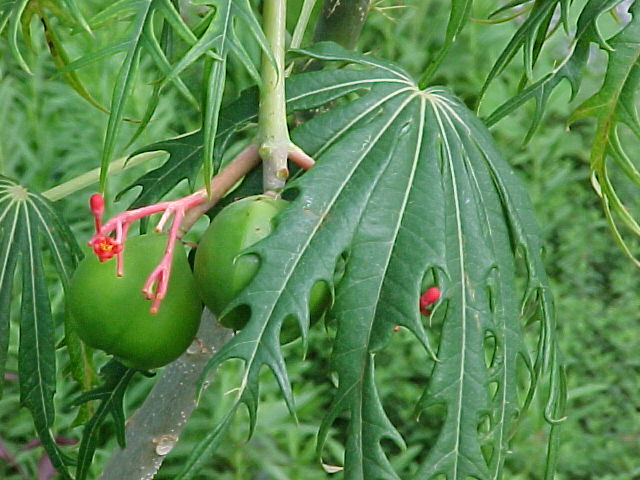
Nearly 1 million seedlings are in the ground at a nursery in Hendry County and promoters are looking for farmers – here and across the country – to raise them as oil-producing plants.
Researchers say the plant can produce four times more fuel per acre than soy, and 10 times more than corn.
The demand for oil from the plant already is strong, said Paul Dalton, a former child advocate and attorney who owns My Dream Fuel.
“There are about 100 buyers for every gallon you produce,” he said.
His company soon will open a $1.5 million, 15,000-square-foot center for seed crushing and plant cloning at the State Farmers’ Market off Edison Avenue in Fort Myers.
The Jatropha tree, native to Mexico and Latin America, has been grown in other countries, such as India and Africa, for fuel and medicine. It produces fruit with oily seeds that can be crushed to make biodiesel.
In India, there are large plantations with millions of Jatropha trees and My Dream Fuel has a contract with the government to train 1,500 farmers to grow the trees. In China, there are now more than 1 million acres of Jatropha growing.
Locally, Dalton has so much faith in the trees that he expects to put another 1 million in the ground in LaBelle before June.
His company is one of the first to do large plantings of trees in the U.S., he said.
Some of the trees came from a cloning plant in Mysore, India, and some came from the company’s own testing program.
The cloning plant here will be able to churn out plants at the rate of 1 million a month, Dalton said.
“We studied our mother trees that we use to clone for over six years, and we have over 500 of them. So we have the largest bank of mother trees in the world, of any company,” he said.
In Southwest Florida and across the state, more crushing plants are planned to keep up with the expected growth in demand for Jatropha oil.
In Collier County, the small farming town of Immokalee is being scoped as a possible site for a processing plant that would produce biodiesel from the oil.
Leading that effort is Golden Gate Estates resident Dave Wolfley, the owner of Sunshine Biofuels, a start-up company formed two years ago to build an alternative fuel plant.
The biggest issue had been finding the feedstock.
Jatropha is just what Wolfley has been searching for.
“There is a ton of money in it,” he said.
He’s searching for large landowners in Southwest Florida who are willing to give Jatropha a try. He said he’s found a few, but he won’t reveal their names.
Concerned about pollution and the country’s dependence on foreign oil, Wolfley has developed a small processing plant in his garage where he uses waste vegetable oil from restaurants to cook up his own biodiesel to fuel a Jeep and a Ford pickup truck.
Dalton expects his seedlings to go quickly. Last year, his company sold its entire inventory of about 12,000 trees in four days, he said. Back then, the trees were in pots and there wasn’t a nursery.
“We know of a couple of groups from New York and from Spain that want to plant in Texas and Brazil. So in the next couple of weeks, we may exhaust our current supply,” Dalton said.
In Southwest Florida, Dalton is targeting citrus growers with diseased trees and cattle ranchers looking to diversify.
The dreaded canker and greening diseases have left thousands of acres of citrus land sitting bare, which could be used to grow the new energy crop. The hardy Jatropha is more resistant to disease and can survive a three-year drought.
The Jatropha crop has the potential to be more profitable than citrus, Dalton said.
The average farmer can gross a little more than $2,000 an acre annually at current prices, and the plants live 40 to 50 years, he said.
The main expense for the grower is the plant itself. A seedling costs $3, with a $2 planting fee.
My Dream Fuel offers to plant and harvest the trees mechanically for growers. Under the arrangement, growers prepare the fields and maintain them. The plants require an occasional watering and virtually no fertilizing.
“It’s such an easy tree to care for. It doesn’t really require much at all,” Dalton said.
For the first 500 gallons of oil produced, larger growers get all the profits. After that, there’s a sharing arrangement.
In all, My Dream Fuel has about 1.5 million trees in the ground in Southwest Florida.
Eight months ago, Dalton donated 1,500 seedlings to Lee County for several test plots, including one on a nearly 1-acre farm in the Buckingham area.
LaBelle Grove Management in Hendry County also purchased young trees for an experiment of its own.
The test projects have gone well, Dalton said.
A few other growers are trying Jatropha in Southwest Florida, but they’re keeping it quiet, in part because they want to stay ahead of the competition, he said.
Ron Hamel, executive vice president of the Gulf Citrus Growers Association, representing growers in a five-county region, said he hasn’t heard that growers are jumping all over the idea.
But the potential for a new crop has created a buzz in the industry.
“I haven’t heard anything negative about it,” Hamel said.
Locally, environmentalists don’t seem to be raising a big fuss about Jatropha.
“If it lives up to its promise of being a very productive source for biofuel, then great,” said Brad Cornell, a policy advocate for Audubon of Florida and the Collier County Audubon Society.
The society doesn’t support growing corn for ethanol because there’s no efficient way to do it, and there are concerns about greenhouse gas emissions, he said.
Roy Beckford, an agricultural and natural resource agent for the University of Florida/IFAS in Lee County, has pushed Jatropha as an alternative crop for South Florida growers for years.
He said it’s actually good for the environment because one acre of plantings, which is about 600 trees, will remove four metric tons of carbon dioxide gas from the air a year.
Beckford is overseeing several experiments with Jatropha in Lee County. He’s also working with a few farmers with plans to grow the trees commercially on 10-acre plots in North Fort Myers and Arcadia.
One grower in Lee County has set aside 200 acres for the promising crop, Beckford said.
“Certainly in our area we are kind of pioneering this whole thing,” he said.
Palm Oil & Deforestation: Truth or Fiction?
Have you ever noticed that a herd of lembu or cows, all tend to move together in the same direction? Have you often wondered why this phenomenon occurs?
Imagine that you are taking a slow and leisurely drive along one of Malaysia�s lovely scenic country roads, away from the speeding juggernauts and cars on the North South highway. As you drive, you take in all the rolling fields of lalang, oil palm plantations stretching as far as the eye can see. Suddenly, something catches your attention. It�s a herd of lembu up ahead, in a nearby open field. Curiosity gets the better of you and you park off the road to investigate further. And there, you stand beside your car, in the middle of nowhere, watching the herd instinct in action.
For unexplained reasons, you scramble towards a low wooden fence and catch up to the lembu as the herd slowly makes its way across the field of lalang. Curious as to why they would all move in the same direction, you look towards the center of the herd and wonder aloud: "Why are all the lembu walking in this particular direction, as if on auto pilot?"
When I ask this question at all my seminars, the response I hear from delegates from all over the world is invariably the same: "They're all moving in the same direction because everybody else is!"
People and organizations too are like this herd of lembu. They too are strongly influenced by the direction of the surrounding herd. Just take a look at the behavior of some NGO's in the developed world.
First, we have the so-called Centre for Science in the Public Interest (CSPI). Helmed by its Executive Director, the infamous Michael Jacobson, and backed by an annual budget in excess of US$16 million, CSPI has launched disinformation campaigns against Malaysian Palm Oil. In fact, so disingenuous has been Jacobson's claims that he has earned the rare distinction of being called various things in the media � ranging from the benign "Consumer Advocate" to the less flattering Nutrition Terrorist, Terrorist, Food Fascist, Food Cop, Killjo�, Food Nazi etc. In fact, the latter labels appear with such stunning regularity in the media that few men could have been so definitively defined.
Jacobson, to put it mildly, is guilty of utter disregard for the truth and scientific facts, frequently exaggerating figures and claims to advance CSPI's own agenda
Having failed in a campaign in the eighties to portray palm oil as unhealthy, Jacobson and CSPI have been racking their collective brains as to how to discredit what is, inherently, healthy oil. Health claims or the converse, �un-healthy� claims, of course, have to be backed by rational science. However, these are matters that CSPI, despite their grandiose and associative-scientific sounding name, would have difficulty in delivering. Throwing figures and �facts� that would fail to pass muster for a secondary school science project, CSPI recklessly and with gay abandon, continues to launch fresh attacks, this time targeting the sustainability of oil palm cultivation. They argue, most deviously, that oil palm plantations have led to the destruction of rainforests and consequently, have deprived orang utans of their natural habitat. Interesting. Perhaps, even persuasive. If not, for the facts!
The superior sustainability of the Malaysian palm oil industry is patently obvious, and it is clear that the Malaysian oil palm cultivation is superior to any large scale agriculture in the tropics or the temperate countries in terms of sustainability parameters. The plantation industry is professionally managed, with many of them such as IOI Corporation, Golden Hope, PPB Group and KL Kepong, operating as listed corporations on the Malaysian stock market where corporate governance and corporate responsibility are well practiced more than farm activities in other parts of the world. The Palm Oil Truth Foundation (www.palmoiltruthfoundation.com) has sought to remedy the misconception that palm oil contributes to deforestation and enlighten the world of the fact that the Malaysian Palm Oil industry has always adopted sustainable cultivation best practices, including conservation and replanting. The MPOC, in fact has set up a US$5 Million Conservation Fund to assist in wild-life conservation.
But Jacobson understands the lembu phenomenon and knows that the herd instinct will take over. And sure enough, the NGO�s and other organizations have taken the bait and like the proverbial lembu, have predictably, blindly followed the herd.
First, the BBC sent a film crew to film the so�called deforestation and habitat loss of the Orang Utans. Then the NGO�s added their voices to the irrational chorus of calls for consumers to avoid palm oil products as they had allegedly come from unsustainable sources. The Friends of the Earth, a UK NGO alleges that �the palm oil industry is now considered by scientists as the biggest threat to the Orang Utan�! Scientists? Which scientists? The pseudo-scientists from the verbose sounding �Center for Science in the Public Interest�? It was almost hilarious to watch documentary after documentary warning of the dangers of palm oil because of the damage caused by the humble oil to Orang Utan habitats. Hilarious because nothing could be further from the truth, at least as far as Malaysia is concerned!
Comprehensive policies and laws on environmental protection are in place in Malaysia and are strictly enforced by the Department of Environment. Endangered species, including Orang Utans, needing protection are given priority with strong conservation programs put in place. Sabah, with a growing palm oil industry and one of the largest states in Malaysia had drafted a master list of protected areas based on the guidelines of the World Conservation Union (IUCN). In fact, 21.8% of Sabah is now protected, more than double the 10% recommended by the IUCN. It is also interesting to note that the Malaysian Palm oil industry is the prime mover for the Roundtable for Sustainable Palm Oil to encourage best practices and to minimize any adverse impact on the environment by the industry, long before the latest shenanigans initiated by CSPI started.
Almost all oil palm expansion in Malaysia is pursued through the conversion of existing rubber, cocoa and coconut plantations or from logged over forest areas which have been earmarked for agriculture. Moreover, out of the total land area of 30.2 million hectares, only 6 million hectares have been designated for agriculture under the Third Malaysia Agricultural Plan. Oil palm cultivation falls well within the area zoned for agriculture. Ironically, the area still under forest cover remains at well over 60 %, certainly much higher than that of the developed nations from which all this brouhaha over Orang Utan habitats are originating.
Recently, the European Free Alliance MEP�s together with an MEP grouping known as The Greens in the European Parliament (together, they form the 4th largest grouping in the European Parliament) lent their not inconsiderable voice to the issue. Lobbying the European Parliament�s �Industry, Technology, Research and Energy Committee�, which is tasked with proposing energy policies with an agreed EU target of 25% biomass renewables by 2020, this grouping managed to get the Energy committee to include, inter alia an amendment to �ban the use of palm oil for feeding our cars� due to the �lack of environmental standards and safeguards� leading to �an increase in tropical deforestation�, whilst �failing to reduce greenhouse gas emissions significantly�! Couching their proposal in euphemistic language, and this really takes the cake, the grouping went on to justify their proposal on the basis that the emergence of a European biofuels sector would offer opportunities for biofuel technology transfer to developing countries crippled by rising oil prices! It is this last statement that gives a clue as to the grouping�s real agenda and intentions. The proposal is designed to protect their turf, to protect the European biofuel sector! So much for all the WTO rules against protectionism.
It is about time that the world wakes up to such insidious and deceptive campaigns and that can only be achieved when the world develops the discernment to see through the veil and stop being lembus. That may be counter-intuitive but the herd instinct can only be overcome through education and clear branding and communication programs. Programs that will, ultimately, expose the lies and half-truths that appear to be the penchant and almost exclusive purview of CSPI and others of their ilk.
motor-cycle with biodiesel - test run
That is a good inspiration for us.
Thanks.
How Can You Benefit From Biodiesel?

If you have an interest in being environmentally friendly, then no doubt you're aware of the damage fossil fuels are doing to our environment. Not only that, but at some point they will run out. Add in the recent jump in gas prices, and it's hardly surprising that more people are talking about making their own biodiesel fuel. Although it sounds like a great idea, you need to consider a few points before going ahead and making your own biodiesel fuel.
To start with, let's take a look at what biodiesel fuel actually is. At its most simple, biodiesel fuel is made from either vegetable oil, animal fat, or mixture of the two. It's a clean burning fuel that is made from renewable resources hence the name biodiesel.
Generally, biodiesel fuel is made from straight vegetable oil, sometimes referred to as SVO. So if you want to make your own biodiesel fuel, you'll need to have an adequate supply of the basic ingredients. Unfortunately, most households don't produce enough waste animal fat or vegetable fat to come anywhere close to making enough biodiesel fuel to keep the family car running.
This has led to a whole new industry, with the basic aim of sourcing much larger quantities of raw product. They get together with restaurants, bakeries, and any other business that uses a deep fryer, so that they can collect the used oil for recycling. The oils are then blended and used as the basis for biodiesel fuel. The processes are the same as you'd use to make biodiesel fuel at home, but by having access to a much larger supply of raw products, these companies can produce biodiesel in quantities that are more viable.
One thing to remember is that it's not quite this simple! Used vegetable oil needs to be mixed and stored, which can be quite a problem if you have large amounts of it. You also need to dewater, filter and deacidify the waste oil before it can be used for making biodiesel. This makes the production of biodiesel fuel at home a lot more complicated.
Having said that, it's certainly still quite possible to make biodiesel fuel at home, simply by buying straight vegetable oil, rather than using waste products. Even though it will cost you a lot more, when you compare it to the cost of buying the necessary amount of gas to run your car for a year, you can still save an enormous amount - somewhere around 75 percent. Even better, you're saving the environment too.
The short answer is yes! It can be blended with petroleum in any percentages and used as fuel. There is a fuel called B20 which is 20 percent biodiesel that has shown significant environmental benefits. It can be used in an existing diesel engine with either little or no modifications. The only thing to be aware of is that biodiesel acts as a solvent and can remove old deposits on on your fuel tank walls and your fuel lines. This may lead to a clogging of your filters so care should be taken. But hey - then you have a clean system!!
So if you're interested in saving money and helping out the environment, look at the option of making biodiesel fuel at home. It takes a little bit of effort, but the rewards are definitely worthwhile.
How To Grow Algae For Biodiesel
Although there are many different ways being experimented with to make biodiesel, algae is one of the most promising production sources for biodiesel. Although algae is by no means a new way to create biodiesel, with the current oil crisis going on in the world it is important for companies to look into new ways that they can quickly and efficiently create biodiesel.

Because algae is a renewable resource, it is a great source. Algae can grow in a wide range of conditions, they can grow in bodies of water or even damp places. Just like plants algae need sunlight and carbon dioxide so that it can grow. They use the sunlight for photosynthesis in which they turn sunlight energy into chemical energy. Algae can be grown in a closed structure called photo bioreactor.
In a photo bioreactor you can control the environment which will make you be able to create algae at a much faster rate then just waiting for it to grow in an open pond. The photo bioreactor can be set up to harvest algae by setting it up with nutrients and algal seed.
Different types of photo bioreactors include tanks, plastic sleeves or bags and even glass or plastic tubes. To grow algae at home you simply take a container and put a small amount of algae culture in it. To grow algae for biodiesel you need specific strains from the biodiesel.
If you add an aquarium bubble stone you will increase the growth and help the algae circulate. The only things you will need is CO2 nutrients, fertilizer, and some type of light source. Temperature range depends on the strain that you are using. Suggestions for light sources are fluorescent bulbs and even natural light which will both efficiently do the job.
The real challenges of the biodiesel industry

Biodiesel is a nickname for natural fatty acids that can be used as a replacement fuel for diesel engines. Biodiesel is cleaner, more effective and good for the engine than ordinary fossil fuel based diesel. Moreover and most importantly, biodiesel is renewable and can be manufactured from the remains of biological materials (plants and animals oil) hence the name “bio-diesel”.
In order to produce biodiesel there is a need to process the natural fat, like vegetable oil with a simple chemical process called “transesterification”, which is actually reacting the oil with some kind of a catalyst like a strong base, to separate the fatty acids from the oil.
The biodiesel industry today focuses on the machinery and methods that will be used to produce biodiesel from vegetable and animals oils. This industry grow rapidly and provide a large set of methods to produce biodiesel from equipment for home made fuel, for personal use, to large industrial machines for mass production of bio-diesel and other bio-fuels. The sources of the raw material (oils) for biodiesel is also variable and go from used cooking oil to fresh oil produced directly from plants, like soy.
The problem with biodiesel is actually the sources that will be used to produce the fuel in large quantities. Today, there is not enough oil on earth to support the replacement of the entire fuel demand with biofuels. The simple facts are that if we will transform our currently crops to fuel, we will soon won’t have anything left to eat. The current source for biodiesel is mainly very important edible crops like corn and soy. The great increase in bio diesel production in the past few years already caused an increase in food prices, and the future famine disaster is already knocking on the door.
According to this, in order to secure biodiesel as a solid fuel resource for the future, the industry must focuses in a new resources of biological oils that will not jeopardize our edible crops. some replacements have been suggested in the past, and look promising.
One idea for new oil source is using algae. algae are most simple to grow than plants and produce a large amount of oil by fixing atmosphere carbon using the sun light energy. algae are also easy to harvest and process than plants. However, year of scientific effort to make oil production from algae was yet to be successful, and mass production of oil from algae and its relative is still seams to be a science fiction.
Other ideas focuses on new kind of crops that naturally producing large amount of oil, are easy to grow and are not used as a nutritional source, so they will not compete human food supply. As an example, people suggested to use jatropha plants has a resource for oil production. But the truth is that even these crops will probably will not solve the problem and will fail to supply the huge demand to fuel that predicted to the near future.
As a result, I believe that the big challenge of the biodiesel industry is not in improving that current methods of crops growing or industrial techniques, but in the scientific research and biotechnology.
Biodiesel research must try to use the new biotech methods that were dramatically improved in the last decades, to create a new kind of crops or algae that will be genetically engineered to increase the quality of these crops as oil providers. The scientific world is working on this topic for while with small successes, but in order to bring a good solution the scientists will need much more funding. This is where the industry must enter and supply the demand of science to make these crops a reality. The energy industry must switch its thinking and think more like people from the drug industry – invest in basic scientific research for better results in the future. The first company that will successfully create the new kind of crops, will gain a huge influence on the entire economy from agriculture to transportation, promising a gigantic profit in the prospect.
The biodiesel manufacturers must give attention to research and development of the raw materials of their industry (oils) in order to assure a fine and profitable future for them and for us.
 Labels:
agriculture,
bio-diesel,
biodiesel,
biotechnology,
ideas,
industry,
science,
techology
|
Labels:
agriculture,
bio-diesel,
biodiesel,
biotechnology,
ideas,
industry,
science,
techology
|
 0
comments
0
comments
Homemade Biodiesel Processor
Biodiesel is a fuel that is friendly to the environment and can easily be made in your own home using everyday things like waste vegetable oil as your main ingredient. The great thing about biodiesel is that you only need three simple ingredients to make it.
All you really need is methanol, new or used oil, and lye.
This is how to build your processor.
First of all, you have to set up the drum by cutting a large hole in the top of a steel drum. You then drill a hole about 1.5 inches into the bottom of this drum. Be prepared to attach a pipe to it. Simply weld a pipe the same diameter as the hole to the bottom of the drum. You will need to attach a brass ball valve to this pipe. This will be your drain valve. Just so you know it does not have to be brass, but using brass makes the valve more durable.

Drill another hole into the side of the drum but this time in the bottom, make it the same size as your heater element. Heater elements can be found in old hot water heaters or can be purchased from your local hardware store. Alright, now go ahead and fit your heater element properly, making sure it is not touching the either side of the drum. The heater element will need to be wired so that it is connected to your power source.
The next thing to do is to assemble the chemical mixer. You can do this by attaching one pulley to the rolled steel rod, and then attach the other pulley to the spindle of the electric motor. A propeller has to be welded to the other end of the rolled steel rod. Cheap shelf brackets can be used as propellers. Attach the rod, pulley and propeller assembly to one side of the hinge. This will allow you to be able to move the mixer in future when necessary.
Ok, across the top of the drum, weld a piece of angle iron. This angle iron will be there to offer support for the mixing apparatus. The unattached side of the hinge should then be attached to the angle iron so the propeller and rod assembly sits in the middle of the drum. With your hinge now fixed it should swing the propeller and rod back and forth. The next step involves you finally mounting the electric motor onto the side of the drum. You should be able to mount the motor directly to the drum without it tipping the drum. Fit a belt to the pulleys and tighten it to desired length by wedging a block of wood into the hinge. A tight belt is necessary to help you to mix the biodiesel in the drum. The last thing you need is a simple measuring stick and you are done.
About the Author:
If you need more information on homemade biodiesel processor, please visit our website: http://biodieselcorner.com
11 Most Frequently Asked Questions on Converting Your Car to Biodiesel

1. OK, So what do I need to do to convert my car to biodiesel?
First and foremost, you need to have a diesel engine car. Biodiesel CAN NOT be used in a gasoline engine. Having said that, any engine that runs on #2 diesel can also be run on biodiesel. This means, home furnaces, generators, semi-trucks, farm equipment, fishing boats, etc. There is really nothing you need to do and nothing you need to convert. Just use it the same as any other fuel. “Conversion” becomes necessary when you want to run your diesel engine on Straight Vegetable Oil (SVO) For some pre-1994 model vehicles it is said that you need to replace your rubber hoses with synthetic ones. But truthfully, unless you have a leak, I wouldn't bother.
Not necessary. There is no mechanical reason that I know of to support this. Any blend of biodiesel, from 100% biodiesel (B100) to 100% diesel can be used in any diesel engine.
Not necessary. Biodiesel is a solvent and as such will also start cleaning your diesel engine and your fuel system. What it is going to clean is the sludge left behind from regular diesel fuel. Over time, this sludge can clog your filters. The truth is, biodiesel will keep your car's fuel system very, very, clean. The degreaser cleaning properties of biodiesel will clean the system of the accumulated diesel sludge/debris first. It might take weeks, months or years, who knows? Engines are funny. After a while, you may need to change your fuel filter, but you'll need to change them anyway as a normal maintenance procedure. If it clogs up, or you are having a problem (loss of power, smoking, coughing, trouble starting, etc.) and you suspect it could be related to the fuel filter, then by all means, switch it out, they are fairly cheap anyway. Simply change out the filter and chances are your problems will go away. It's not a bad idea to keep an extra fuel filter on hand anyway.!
..just in case. The good news is, once your engine's fuel system has been cleaned, it will stay incredibly clean from then on.
Biodiesel is a solvent and a degreaser (a good one) and as a solvent, yes, it will eat rubber over time. The truth is, petroleum diesel with a high sulfur content does this too, only slower. Biodiesel acts a lot like Ultra Low Sulfur Diesel (ULSD) that is now fast becoming the diesel standard. Also, since 1993, diesel engines and equipment have been reworked and redesigned, using synthetic rubber with ULSD in mind. The auto makers have been phasing out rubber from the fuel systems themselves. This is resulting in fewer fuel leaks for diesel and biodiesel users alike. If you have a pre-1994 vehicle with rubber fuel hoses and are experiencing leaking problems, then yes, you should replace them with ULSD compatible hoses.
No problems at all. You can switch back and forth as much as you like.
It's kind of interesting to watch, truthfully. As the biodiesel industry gets older and wiser, more and more OEMs (Original engine Manufactures) are warming up to this idea and making positive statement about 100% biodiesel and this is reflected in their warranties. The truth is, it's kind of tough for them to argue the fact. The diesel engine, after all, was designed for this. Caterpillar, John Deere, and New Holland all accept and explicitly warrant B100 biodiesel in their engines. Others are taking a more "wait and see" attitude. They are warranting blends like B20, or B5 but stop short of wholeheartedly endorsing the idea. Other say they "neither oppose nor endorse" the use of bio-fuels.
This is where it gets interesting; Mercedes and Volkswagen both sell cars in Europe and the USA with diesel engines and there is no problem with warranty issues in Europe, but here in the good ol USA, they don't/won't support the use of biodiesel or the biodiesel industry. So bottom line? One, check your warranty. Two, if a OEM wants to deny a warranty based on biodiesel use, they can. But legally, they have to show a compelling reason that biodiesel hurt the engine. Which would be very hard to do. This is a very good reason to use ASTM (Commercial biodiesel) fuels, especially in newer cars or trucks.
Because modern diesel engines have been modified to meet diesel #2 viscosity standards, straight vegetable oil like the kind Rudolf Diesel used in 1912, is much thicker. This is the thing which kept biodiesel out of the energy/fuel playing field for so long. What has happened recently is a process called "transesterification." This process is used to thin the vegetable oil and remove the glycerol molecule from the vegetable oil and replaces it with methyl alcohol , or methanol. In order to do this, the methanol is mixed with sodium or potassium hydroxide (Lye) before being mixed with the vegetable oil. This is the basic process. Commercial production requires more ingredients and more refining processes, but you get the picture.
For home-brewers, the possibility of residual ingredients or by-products in the brewed biodiesel is a compelling reason to "wash" then test the biodiesel. Biodiesel that is commercially sold, is regulated and made to the ASTM standard, does not allow for residuals to be present. Therefore, you should have little worry with commercial biodiesel .
As we have said, just because the first diesel engines were designed to burn vegetable oil, a lot has changed in the engine world since 1912. Biodiesel fuel, to work efficiently in a modern diesel, we need to lower the viscosity (thickness) of the vegetable oil. we accomplish this through the biodiesel production process. It can also be accomplished by modifying the engine with a SVO Conversion kit. But additionally, there are other reasons not to use straight vegetable oil. One, it still contains glycerol which doesn't burn as cleanly as biodiesel and can leave deposits behind in the injection chambers. Two, SVO still needs to be de-watered, filtered and heated prior to introducing it into your tank. Also, filtering SVO can be very tedious to say the least, needing lots of time and energy, not to mention equipment and tools
The short answer is...yes. Biodiesel is 100% compatible with diesel #2. There are no worries in that regard. One of the compelling reasons to buy a biodiesel kit in my opinion is to get rid of that financial albatross, called "heating oil" in colder climates. A biodiesel kit can pay for itself in a matter of months, one winter definitely. Kerosene, which is also known as diesel #1, or heating oil #1, is thinner than diesel #2. This, of course, requires a bit more experimentation, but generally, if a heater is designed for kerosene, then it will work with a biodiesel blend. (meaning a higher percentage of kerosene and a lower percentage of biodiesel)
David Sieg is the Managing Director of Global Biotechnology Solutions, an American Company based in Vietnam. He is also the author of the popular http://www.making-biodiesel-at-home.com web site where you can find all the information you need to start saving money of sky-rocketing fuel costs.

